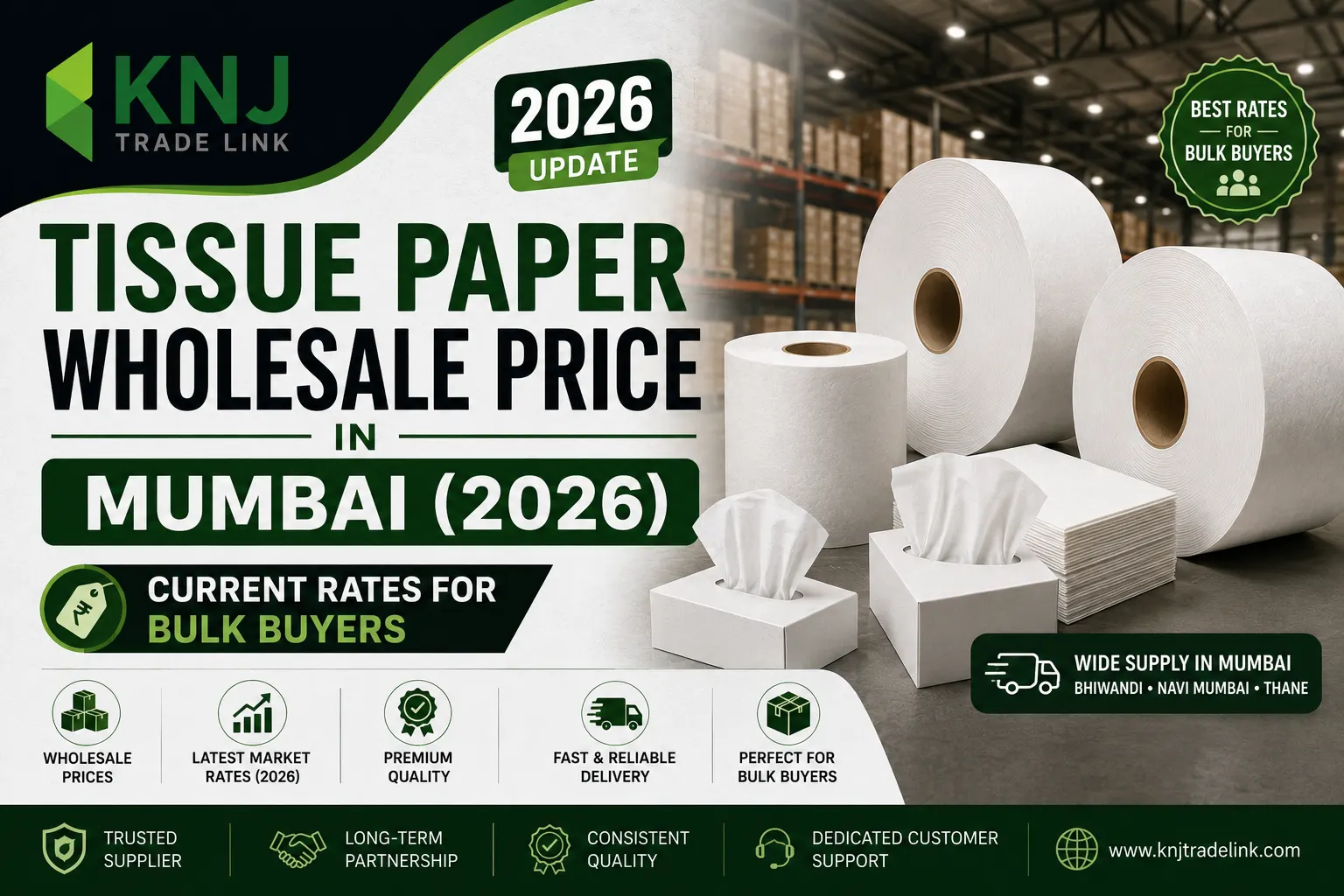
Current Tissue Paper Wholesale Prices in Mumbai
Here are the current wholesale prices for tissue paper raw material (jumbo rolls / parent reels) available to Mumbai buyers from Bhiwandi-based suppliers as of 2026:
| Product Type | GSM | Pulp Type | Wholesale Price (₹/kg) |
|---|---|---|---|
| Tissue Jumbo Roll — Economy | 14–18 GSM | Recycled | ₹60 – ₹80 |
| Tissue Jumbo Roll — Standard | 16–22 GSM | Virgin blend | ₹85 – ₹110 |
| Tissue Jumbo Roll — Premium Facial | 12–16 GSM | Virgin | ₹100 – ₹145 |
| Kitchen Towel Base Roll | 28–40 GSM | Virgin blend | ₹90 – ₹135 |
| Colour Tissue Base Roll | 15–25 GSM | Recycled + dye | ₹65 – ₹90 |
These are ex-Bhiwandi wholesale rates for bulk B2B orders as of Q2 2026. Add ₹2–4/kg for delivery to Mumbai factory locations. GST at 12% applicable additionally. Contact us for a current delivered-to-factory quote for your specific requirement.
Finished Tissue Product Wholesale Prices in Mumbai
If you’re buying finished converted tissue products wholesale (not raw material) — here are current Mumbai market rates:
| Product | Size / Spec | Wholesale Price |
|---|---|---|
| Tissue Napkin 2-ply | 30×30 cm, pack of 100 | ₹45 – ₹65 per pack |
| Tissue Napkin 2-ply | 33×33 cm, pack of 100 | ₹55 – ₹75 per pack |
| Toilet Roll 2-ply | 100–150 pulls per roll | ₹18 – ₹35 per roll |
| Facial Tissue Box 2-ply | 100 sheets per box | ₹55 – ₹90 per box |
| Kitchen Towel Roll 2-ply | 50–60 pulls per roll | ₹35 – ₹60 per roll |
| M-Fold Tissue 1-ply | Pack of 150 sheets | ₹30 – ₹50 per pack |
Note: KNJ Trade Link supplies tissue paper raw material (jumbo rolls) — not finished converted products. The above finished product prices are for reference. If you’re a converter or manufacturer looking for jumbo roll raw material, scroll down for our pricing and contact details.
What Affects Tissue Paper Wholesale Price in Mumbai?
1. Virgin Pulp vs Recycled — Biggest Price Driver
Virgin pulp tissue jumbo rolls cost 25–40% more than recycled grades at the same GSM. Virgin pulp gives softer feel, brighter whiteness, and fewer paper breaks on converting lines — which is why facial tissue and premium napkin manufacturers pay the premium. For economy toilet rolls and budget napkins, recycled grades are perfectly adequate and significantly cheaper.
2. GSM Grade
Lower GSM doesn’t always mean lower price per kg — it depends on the pulp type and processing. A 14 GSM virgin facial grade costs more per kg than a 20 GSM recycled grade because of the raw material quality and manufacturing precision required at lower weights.
3. Order Volume
Wholesale pricing in Mumbai’s tissue paper market is heavily volume-dependent. Buying one truck load (5–10 MT) gets significantly better per-kg rates than spot purchases of 500 kg. Regular monthly buyers with committed volumes get the best rates consistently.
4. Source — Bhiwandi Trader vs Mumbai Distributor
Buying directly from a Bhiwandi-based paper trader vs a Mumbai city distributor typically saves ₹3–8 per kg — because you’re removing one distribution layer. Bhiwandi is Maharashtra’s primary paper trading hub, so sourcing from there instead of a Mumbai middleman gives you closer-to-mill pricing.
5. Seasonal Demand
Tissue paper wholesale prices in Mumbai firm up during festive season (September–November) when demand from hotels, restaurants, caterers, and FMCG brands spikes. Building 2–3 weeks of buffer stock before August keeps you insulated from seasonal price increases.
Tissue Paper Wholesale Price — Mumbai vs Other Cities
| City | Typical Wholesale Rate vs Mumbai | Reason |
|---|---|---|
| Mumbai (from Bhiwandi) | Base reference rate | Direct access to Bhiwandi trading hub |
| Pune | ₹3–6/kg higher | Additional freight from Bhiwandi/Mumbai |
| Ahmedabad | ₹5–8/kg higher | Long-haul freight cost |
| Delhi | ₹8–15/kg higher | Full interstate freight + different supply chain |
| Chennai | ₹6–10/kg higher | Long-haul freight, different mill sources |
This is why Mumbai-based tissue converters and napkin manufacturers have a genuine cost advantage over competitors in other cities — proximity to Bhiwandi paper trading cluster means lower landed cost per kg on raw material.
Who Buys Tissue Paper Wholesale in Mumbai?
| Buyer Type | What They Buy Wholesale | Typical Monthly Volume |
|---|---|---|
| Tissue Converting Units | Jumbo rolls (raw material) | 10–100 MT per month |
| Napkin Manufacturers | Jumbo rolls (raw material) | 5–50 MT per month |
| Hotels & Restaurant Chains | Finished napkins, toilet rolls in bulk | 500–5000 packs per month |
| Distributors & Wholesalers | Finished tissue products | Variable by territory |
| Hygiene Product Brands | Jumbo rolls (raw material) | 5–30 MT per month |
| Caterers & Event Companies | Napkins, tissue rolls in bulk | Seasonal/event-based |
How to Get the Best Tissue Paper Wholesale Price in Mumbai
- Source directly from Bhiwandi — skip Mumbai city distributors and buy directly from a Bhiwandi-based paper trader for ₹3–8/kg savings
- Commit to monthly volumes — spot buyers always pay more. A committed monthly order gets you consistent pricing and priority during tight supply
- Be specific about your grade — tell your supplier exactly what GSM, pulp type, and ply you need. Vague requests get quoted at the safest (highest) price
- Ask for delivered-to-factory pricing — always compare landed cost including freight, not just ex-warehouse rate
- Order trial batch first — before committing to a monthly supply arrangement, run a trial batch through your converting line or verify quality in person
- Build up buffer stock before festive season — buy extra in July–August before September price firming
Get Current Tissue Paper Wholesale Pricing from KNJ Trade Link
KNJ Trade Link supplies white tissue jumbo rolls wholesale to converters, napkin manufacturers, and hygiene product companies across Mumbai, Navi Mumbai, Thane, and beyond — directly from our Bhiwandi base.
We supply both virgin and recycled grades in 12–40 GSM range, with custom roll widths to match your converting machine. Same-day or next-day dispatch to most Mumbai MMR locations.
Share your GSM requirement, roll width, and monthly volume — we’ll respond with a current wholesale price and arrange a sample if needed.
Get Tissue Paper Wholesale Price for Mumbai →
Frequently Asked Questions
Q: What is the tissue paper wholesale price per kg in Mumbai in 2026?
A: Tissue paper jumbo roll wholesale prices in Mumbai range from ₹60–80/kg for recycled economy grade to ₹100–145/kg for virgin facial grade, as of Q2 2026. Finished tissue products like napkins are priced per pack rather than per kg. Contact us for a current quote based on your specific grade and volume.
Q: Where is the tissue paper wholesale market in Mumbai?
A: Bhiwandi, located 25–30 km from Mumbai, is the primary tissue paper and paper products wholesale hub serving the entire Mumbai Metropolitan Region. Most large tissue paper traders and distributors supplying Mumbai are based in Bhiwandi rather than within the city itself.
Q: What is the minimum quantity for tissue paper wholesale pricing in Mumbai?
A: For jumbo roll raw material, bulk B2B pricing typically starts from one truck load (5–10 MT). For finished tissue products, wholesale pricing usually starts from carton quantities. Contact your supplier to confirm MOQ for your specific product and grade.
Q: Is it cheaper to buy tissue paper wholesale from Bhiwandi vs Mumbai city?
A: Yes — buying directly from a Bhiwandi-based trader typically saves ₹3–8 per kg compared to buying from a Mumbai city distributor, because Bhiwandi is the primary trading hub. Even after adding short-haul freight to your Mumbai factory, Bhiwandi-sourced material usually works out cheaper for buyers taking full truck loads.
Q: Do tissue paper wholesale prices include GST in Mumbai?
A: Most wholesale quotes are given exclusive of GST. Tissue paper attracts GST at 12% in India. Always confirm whether a quoted price is inclusive or exclusive of GST before comparing rates from different suppliers.